Inconel 625 vs 718: which superalloy for your part?
Inconel 625 is the solid-solution, corrosion-and-weld workhorse; 718 is the age-hardenable high-strength grade for turbine and structural hardware. When to spec each, how they machine, and how they compare to Hastelloy and Monel.
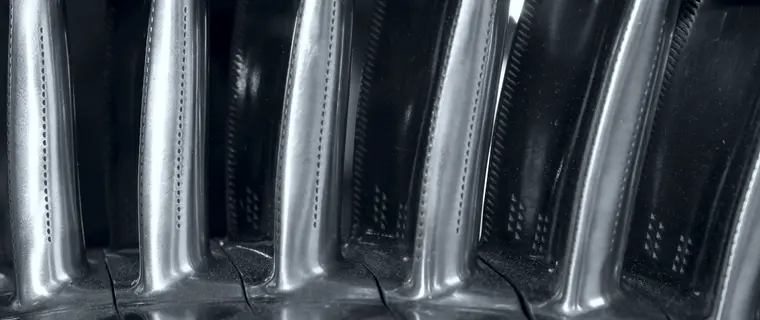
Both are nickel superalloys that keep their strength and corrosion resistance where stainless gives up. Inconel 625 is solid-solution strengthened: easy to weld, outstanding corrosion resistance, the choice where corrosion and weldability matter more than peak strength. Inconel 718 is age-hardened to much higher strength and is the default for highly stressed hot hardware (turbine disks, fasteners, downhole tools), usable to about 650°C. Spec 625 for corrosion and weldments, 718 for strength.
Two alloys, two strengthening mechanisms
The difference that drives every other difference is how each one gets its strength. 625 is solid-solution strengthened by molybdenum and niobium: it is strong as-is, stays ductile, and welds without a post-weld age. 718 is precipitation hardened, a heat treatment grows a gamma double-prime (Ni3Nb) phase that roughly doubles the strength, but that same chemistry makes it harder to weld and harder to machine.
| Inconel 625 | Inconel 718 | |
|---|---|---|
| Strengthening | Solid solution (Mo, Nb) | Precipitation / age hardened |
| Relative strength | Moderate | High |
| Max useful strength temp | Limited by strength, not corrosion | About 650°C |
| Corrosion resistance | Outstanding, incl. chlorides and sour service | Very good |
| Weldability | Excellent | Trickier (strain-age cracking risk) |
| Machinability | Difficult | More difficult (aged) |
| Cost | High | Higher |
| Typical use | Marine, chemical, exhaust, weld overlay | Turbine disks, fasteners, downhole tools |
When to spec 625
When corrosion or welding drives the part. Seawater and marine hardware, chemical processing, exhaust and bellows, and sour-service (NACE MR0175) oil and gas components where H2S would destroy a lesser alloy. It is also the usual weld-overlay and cladding alloy. You are buying corrosion resistance and a clean weld, not record strength.
When to spec 718
When strength at temperature drives the part. Turbine disks and blades, aerospace structural fittings and fasteners, and high-pressure downhole and wellhead hardware. 718 holds high strength up to about 650°C, above which the strengthening phase starts to dissolve. Call out the heat-treat condition on the drawing (for example aged per AMS 5663), because an annealed 718 part and an aged one are different materials in the same shape.
How they machine (plan for it)
Both work-harden fast, run hot because nickel conducts heat poorly, and chew tools. The shop needs rigid setups, sharp carbide or ceramic tooling, low surface speed, positive rake, heavy flood coolant, and a feed that never dwells (dwelling glazes the surface and the next pass rides on work-hardened material). Aged 718 is harder than 625 and the worst of the two to cut. Expect real cost and lead time next to stainless, and send the work to a machine shop that runs superalloys regularly, not one trying it for the first time.
625 and 718 vs Hastelloy and Monel
Superalloy selection is about matching the environment:
- Hastelloy (C-276) for the most aggressive acids and wet-chlorine chemical service, beyond what 625 handles.
- Monel (400) for seawater, hydrofluoric acid and some reducing conditions, where a Ni-Cu alloy beats a Ni-Cr one.
- Inconel (625 / 718) for high-temperature strength plus broad corrosion resistance, the aerospace and oil-and-gas default.
- A286 as a lower-cost iron-nickel option for moderate-temperature strength when 718 is more than the part needs.
What to send for a quote
Your part, the alloy and its condition (for example 718 aged to AMS 5663, or 625 annealed), the spec and any material certs or traceability, and the quantity. Request a quote and we route to aerospace and oil-and-gas shops actually tooled for superalloys.
FAQ
What is the main difference between Inconel 625 and 718?
How they get their strength. 625 is solid-solution strengthened (weldable, corrosion-first); 718 is age-hardened to much higher strength (strength-first). That one difference drives weldability, machinability and where each is used.
Which is stronger, 625 or 718?
718, by a wide margin, once it is age-hardened. 625 trades peak strength for easier welding and even better corrosion resistance.
Which is easier to weld?
- It welds cleanly without a post-weld age. 718 can suffer strain-age cracking and needs careful procedure and heat treatment, which is why 625 is the usual overlay and weldment alloy.
Is Inconel hard to machine?
Yes. Both grades work-harden, run hot and wear tools quickly, and aged 718 is the tougher of the two. It needs rigid setups, the right tooling and low speeds, so it costs more to machine than stainless.
What temperature can Inconel 718 handle?
It keeps high strength to about 650°C. Above that the gamma double-prime phase starts to dissolve and strength falls off; for higher temperatures at lower stress, 625 or another alloy is the better pick.
Last reviewed: October 2026. Related reading: what is NADCAP and 6061 vs 7075 aluminum.
Need this part made?
Describe your part once and we'll match you to vetted Canadian shops that can actually make it, then bring back 3 to 5 quotes. Free for buyers, no account needed.