Importing machined parts from Canada into the EU
How an EU buyer sources custom parts from Canada duty-free under CETA: the origin declaration, what qualifies, import VAT, and the Incoterms to put on the RFQ.
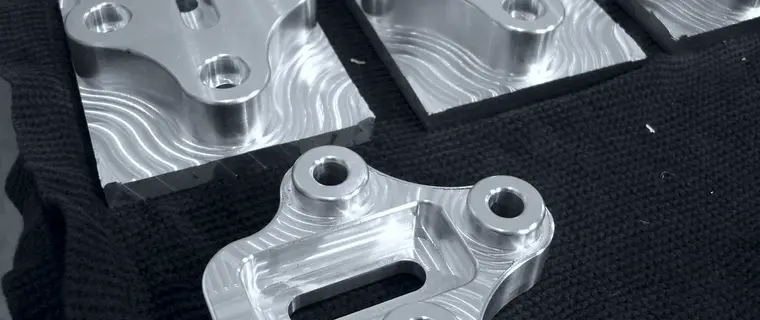
Quick answer (as of November 2026): Under CETA, the Canada-EU trade agreement applied provisionally since 21 September 2017, machined and fabricated industrial goods from Canada enter the EU duty-free when they meet the agreement's rules of origin. There is no customs duty on a qualifying part, and the Canadian exporter proves origin with a short declaration printed on the invoice, no certificate and no signature required. Import VAT in the destination country still applies: CETA removes the tariff, not the tax. Agree the Incoterm up front (EXW, FCA or DAP) so it is clear who arranges freight and clears customs.
Do this next:
- Confirm the part qualifies as originating under CETA's product-specific rule for its HS code.
- Ask the Canadian shop to put the CETA origin declaration, with its Business Number, on the commercial invoice.
- Set the Incoterm on the RFQ, and budget for import VAT, which CETA does not remove.
- Request a quote and tell us the destination country and delivery terms.
What CETA removes, and what it does not
CETA eliminated customs duties on almost all trade between Canada and the EU. About 98 percent of EU tariff lines became duty-free for Canadian goods when the agreement started applying on 21 September 2017, rising toward 99 percent as the remaining phase-ins complete; for industrial goods the two sides agreed to eliminate 100 percent of tariff lines, nearly all of them duty-free from day one ([Government of Canada CETA overview](https://www.international.gc.ca/trade-commerce/trade-agreements-accords-commerciaux/agr-acc/ceta-aecg/overview-apercu.aspx?lang=eng), [European Commission](https://policy.trade.ec.europa.eu/eu-trade-relationships-country-and-region/countries-and-regions/canada/eu-canada-agreements_en)). In practice a custom machined or fabricated part from a Canadian shop carries no EU customs duty when it qualifies as originating.
What CETA does not remove is import VAT. When the part lands, the destination country charges its own import VAT at the standard rate, the same as on any import, which a VAT-registered buyer normally reclaims. Plan for the VAT cash flow even though the duty is zero.
Whether your part qualifies: rules of origin
Duty-free treatment is not automatic just because a part ships from Canada. The good has to be originating under CETA's Protocol on Rules of Origin, which sets a product-specific rule for each HS code. For machined and fabricated parts the usual tests are that the part is wholly obtained in Canada, that any non-originating materials undergo a required change in tariff classification when they are worked into the finished part, or that the part meets a value threshold. Machining qualifying stock into a finished component usually clears the rule, but the rule that counts is the one listed for your part's HS code, so look it up rather than assume.
Proof of origin: the origin declaration
CETA does not use a stamped certificate of origin. The exporter proves origin with an origin declaration, the set text from the agreement, printed on the invoice or another commercial document. No separate certificate and no signature are required. A Canadian exporter identifies itself with its Government of Canada Business Number in the declaration; the EU's REX exporter-registration system does not apply in Canada. The declaration is valid for twelve months ([EU Access2Markets, CETA origin declaration](https://trade.ec.europa.eu/access-to-markets/en/roo-explain-term/origin/CA/destination/FR/term/statementOrigin)). Ask the shop to include it on the invoice; a shop that exports to the EU routinely will know the wording.
Incoterms: who moves the part and clears customs
The Incoterm on the RFQ decides who arranges freight, who exports from Canada, and who imports into the EU. Three cover most custom-parts orders.
| Incoterm | Who arranges freight | Who clears EU import | Good when |
|---|---|---|---|
| EXW (Ex Works) | The buyer, from the shop door | The buyer | You have a freight forwarder and want full control |
| FCA (Free Carrier) | The buyer, from a named point; shop handles Canadian export | The buyer | You want the shop to handle the export side |
| DAP (Delivered at Place) | The shop, to your address | The buyer (VAT and any formalities) | You want one delivered price to your door |
For a first order, DAP gives the simplest landed picture: the Canadian side delivers to your address and you handle the import VAT. State the Incoterm and the destination on the RFQ so the quote is a true landed comparison.
Why Canadian parts, specifically
A buyer looking past local suppliers is usually after certified, allied-jurisdiction work: a G7 and NATO country, Canadian law over the file, tariff-free access under CETA, and quality systems that map to the standards an EU buyer already knows (see AS9100, EN 9100 and CSA equivalence). For aerospace, defence and precision work that is not a commodity-price fight, Canadian shops compete on certification and trust, not on the lowest unit price.
What to send for a quote
Your part (a drawing or STEP file), the destination country, the annual volume, the Incoterm you want, and any certification the program requires. Request a quote and we route it to Canadian shops that export to the EU and can put the origin declaration on the invoice.
FAQ
Do parts from Canada enter the EU duty-free?
Qualifying industrial goods do, under CETA. The part has to meet the agreement's rules of origin for its HS code, and the exporter has to include the origin declaration on the invoice. Import VAT still applies: CETA removes the customs duty, not the tax.
What is the CETA origin declaration?
A short set text from the agreement, printed on the commercial invoice or another commercial document, in which the exporter declares the goods originate under CETA. No separate certificate and no signature are needed. A Canadian exporter cites its Government of Canada Business Number in the declaration.
Do I need a certificate of origin from the shop?
No. CETA replaced the certificate with the invoice-based origin declaration. Ask the shop to print it on the invoice; a shop that exports to the EU will know the wording.
Does CETA remove import VAT?
No. It removes customs duty on qualifying goods. The destination country still charges import VAT at its standard rate, which a VAT-registered buyer normally reclaims.
When did CETA take effect?
It has applied provisionally since 21 September 2017, which covers essentially all of the tariff elimination. Full entry into force awaits ratification by every EU member state.
Last reviewed: November 2026. Trade terms change, so confirm tariff classification, rules of origin and VAT treatment against the linked official sources and a customs broker before an order. Related reading: AS9100, EN 9100 and CSA equivalence and reshoring to Canada.
Need this part made?
Describe your part once and we'll match you to vetted Canadian shops that can actually make it, then bring back 3 to 5 quotes. Free for buyers, no account needed.